Padel vs tennis: what are the differences and which to pick?
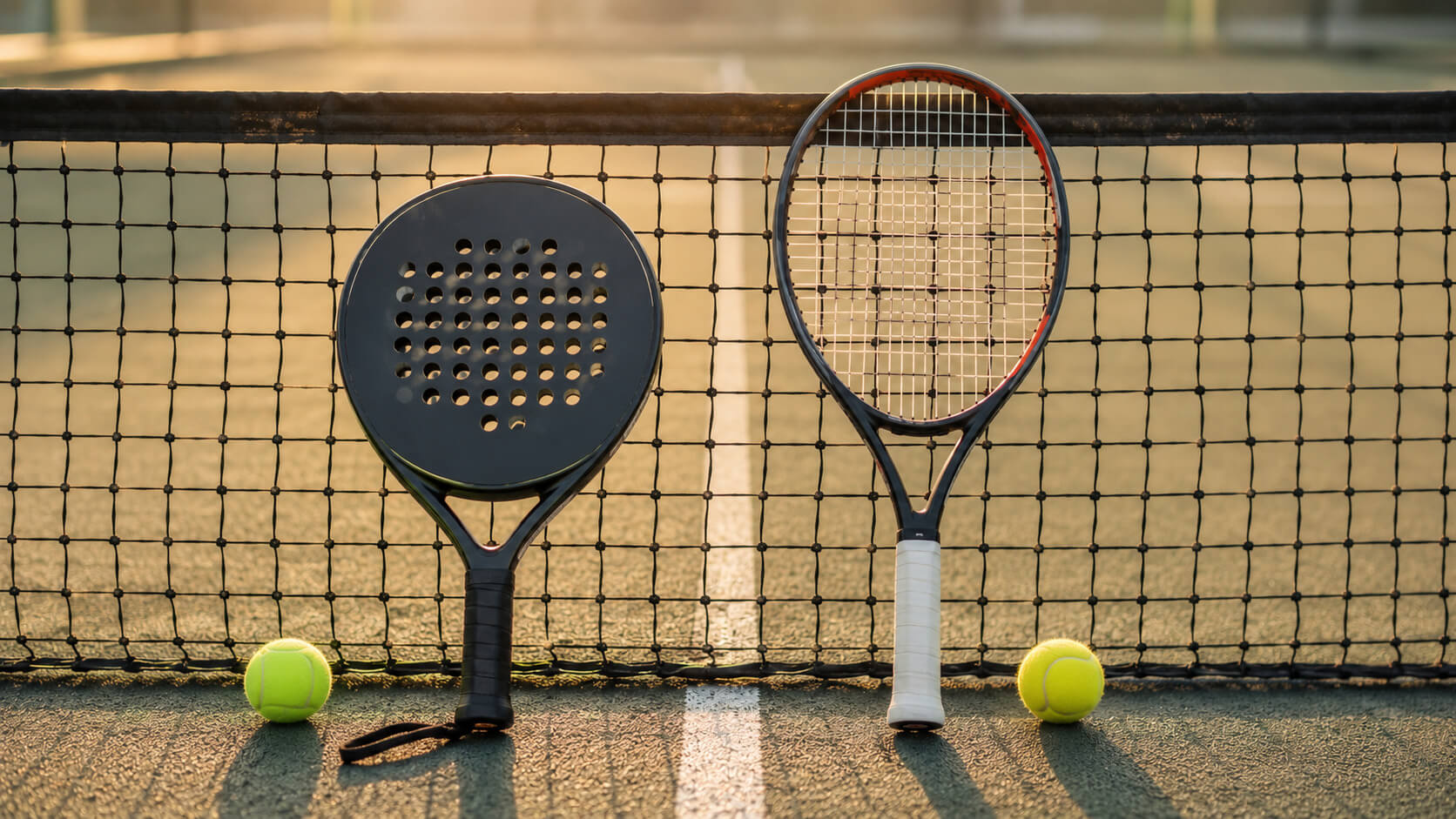
Padel or tennis? From afar the two sports look alike (a racket, a ball, a net), but the playing experience is radically different. Padel is played on a smaller court, surrounded by glass walls, in doubles, with a solid racket. Tennis demands more power, technique and space. If you are torn between padel vs tennis, this comparison helps you understand the real differences and pick the sport that suits you.
The court: size and walls
This is the most visible difference.
- Padel: a 20 × 10 m court, enclosed by glass walls and fencing. The ball bounces off the walls, which extends rallies.
- Tennis: a 23.77 × 8.23 m court (singles), open, with no walls. A dead ball goes out of play.
The walls change everything: in padel few balls are definitively lost, which makes points longer and more tactical.
The racket and the ball
- Padel: a solid, stringless racket, shorter and more manoeuvrable. If you are starting out, see how to choose a padel racket.
- Tennis: a strung racket with a long handle, generating more speed and spin.
The padel ball is slightly less pressurised than the tennis ball, but the two are very similar.
Rules and scoring
The scoring is identical (15, 30, 40, game, sets). The key differences:
- The serve: underarm and after a bounce in padel, overhead in tennis.
- The walls: usable in padel, non-existent in tennis.
- The format: padel is almost always doubles, tennis often singles.
For the detail, read our guide to the padel rules explained simply.
Accessibility: padel's big strength
Padel is reputed to be easier to pick up. Why?
- The smaller court requires less running.
- The manoeuvrable racket forgives imperfect hits.
- The underarm serve is simple to execute.
- Doubles play shares the effort.
Within a few games a beginner already enjoys real rallies in padel, where tennis takes weeks before you can keep a ball in play.
Tennis remains more demanding technically and physically, but offers a unique depth of play and tradition.
The social side
Padel is played four-a-side, which makes it a very sociable sport: you play, you talk, you laugh between points. It is one of the reasons for its explosion. Tennis, often singles, is more individual and competitive.
Padel vs tennis: which should you choose?
- Choose padel if you want an accessible, social sport where fun comes quickly, without years of learning.
- Choose tennis if you are after pure technique, an individual challenge and a very complete physical workout.
Many players actually do both: tennis builds the strike, padel builds positioning and tactics.
History and rise of the two sports
Tennis is a sport more than a century old, structured around prestigious tournaments and a strong tradition. Padel, on the other hand, was born in the 1960s in Mexico before developing massively in Spain and Argentina.
Over the past decade, padel has seen explosive growth across Europe: new clubs, courts springing up everywhere, very active communities. Its ease of access and social side largely explain this success, which attracts more and more former tennis players as well as complete beginners.
The transfer of skills
Many players move from tennis to padel (and vice versa). Here is what transfers… and what does not:
- What helps: hand-eye coordination, reading trajectories, stamina and comfort with the ball.
- What you must relearn: the underarm serve, the use of the walls, doubles positioning and patience in building the point.
A good tennis player is not automatically a good padel player: a powerful strike can even become a flaw if it is not channelled.
Which profile is each sport for?
- You want to play quickly and with others: padel, accessible and sociable, is ideal.
- You love the individual challenge and pure technique: tennis will fulfil you.
- You are getting back into sport or sparing your joints: padel, with its shorter movements, is often gentler.
- You aim for young, structured competition: tennis has a more established circuit, even if padel is quickly catching up.
Good news for the undecided: padel stays accessible at almost any fitness level. Because rallies rely on short movements rather than long sprints, you can start gently and build up as you play more often, a great way to get back into sport without getting discouraged.
Detailed gear comparison
| Item | Padel | Tennis |
|---|---|---|
| Racket | Solid, stringless, short | Strung, long handle |
| Ball | Slightly less pressurised | Standard |
| Shoes | Suited sole (often clay type) | Surface-dependent |
| Court | Enclosed, with walls | Open |
The entry budget remains comparable, but padel usually requires less technical investment before you start having fun.
The budget to get started
On cost, the two sports are close at purchase but diverge in use.
- Gear: a decent padel racket costs roughly the same as an entry-level tennis racket. The difference comes mostly from lifespan and how often you play.
- Court rental: in padel you share the court four ways, so the cost per player often stays moderate. In singles tennis, the court is shared between two.
- Lessons: padel needs fewer learning hours to be fun, which lowers the "coaching" budget early on.
For many beginners, padel offers a better fun-to-investment ratio in the first year, because you play real points almost immediately.
On the physical side, both sports burn calories and train your cardio. Tennis demands more movement and explosiveness; padel emphasises reflexes and coordination, with an injury risk often perceived as lower thanks to shorter running distances.
Should you choose, or do both?
Many players refuse to pick just one, and they are right. Padel and tennis complement each other particularly well:
- Tennis builds striking quality, stamina and footwork over a large space.
- Padel sharpens doubles positioning, net reflexes and reading the bounce off the walls.
Alternating the two breaks the monotony, calls on different qualities and limits injuries linked to repeating the same movement. If your schedule allows it, keeping a foot in each sport is an excellent strategy.
Practical tip: start with padel to have fun quickly, then add tennis if you want to work on your strike in depth.
Whatever your choice, the key is to play regularly. Find a club near you and get started this week.
FAQ
Is padel easier than tennis?
Yes, to start with. The smaller court, manoeuvrable racket and underarm serve let you enjoy real rallies from your very first games.
Can you switch from tennis to padel easily?
Yes. Tennis players have a good hitting base, but must relearn positioning, the use of the walls and the underarm serve.
Is padel good for fitness?
Yes: it works your cardio, reflexes and coordination, with less impact than tennis thanks to shorter running distances.
Do you need the same gear for both sports?
No. The padel racket is solid and stringless, and shorter. Shoes and balls also differ slightly.
Where can I try padel near me?
At a club with padel courts. Find a club near you and book your first game.
Is padel less stressful on the body than tennis?
Generally yes: shorter movements and more compact rallies reduce impact on the knees and shoulders. The swing remains demanding for the elbow, though, if the racket is too heavy.
Can you play padel as singles like tennis?
It is possible on some adapted courts, but padel is almost always played as doubles. The four-player format is part of the sport's identity and appeal.
Which sport is growing faster right now?
Padel is currently growing far faster than tennis in most of Europe. New clubs and courts open every month, and the number of licensed players keeps climbing. Tennis remains larger overall, with a deeper history and a more established professional circuit, but padel is closing the gap quickly thanks to how social and beginner-friendly it is. For newcomers, this booming community also means it is easier than ever to find partners and games near you.
Conclusion
Padel vs tennis, there is no absolute winner: it all depends on what you are looking for. Padel wins on accessibility and its social side; tennis on technical richness. If you want to have fun quickly and play with others, padel is the ideal choice. To go further, read our tips to improve at padel and sign up for tournaments near you.
Ready to try? Download Padeligo and find your first padel match in seconds.