How to choose padel shoes
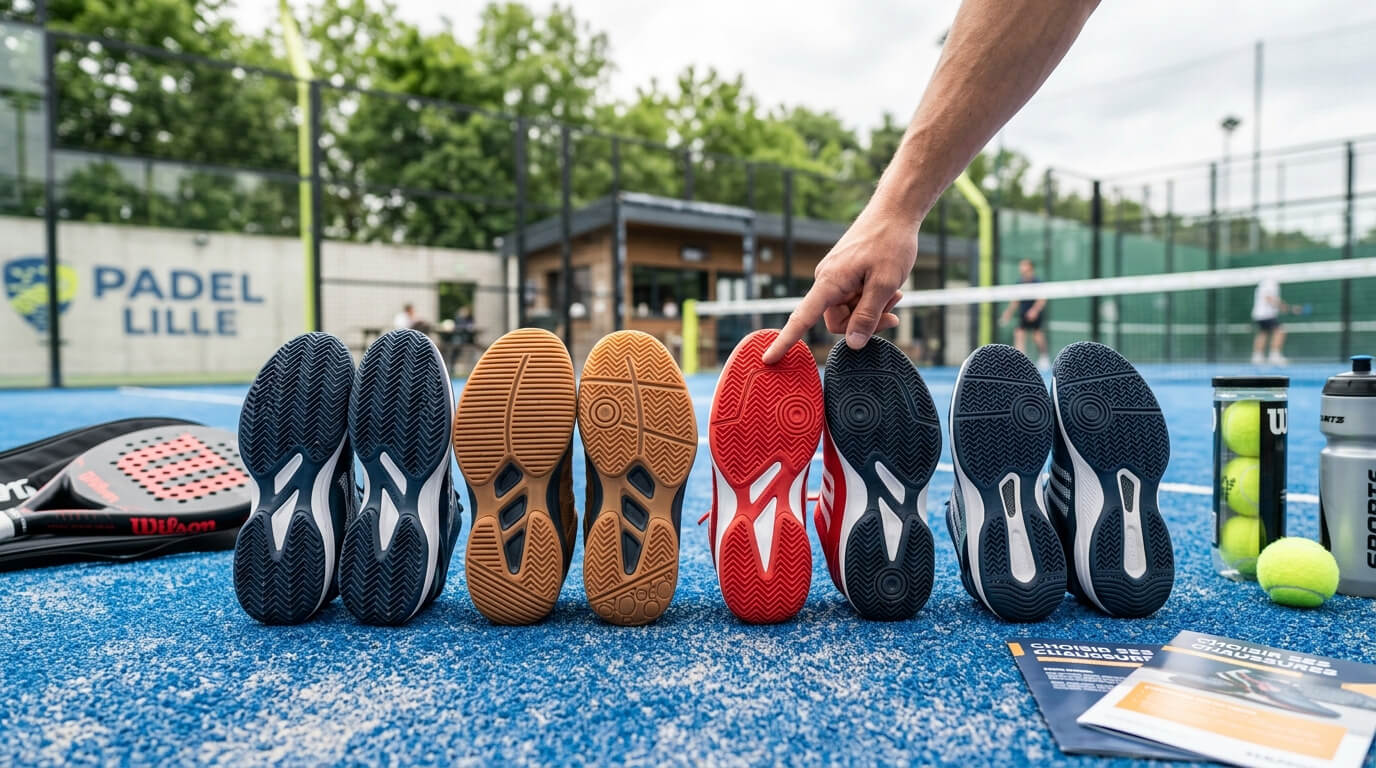
Everyone talks about the racket, rarely about the shoes. Yet in padel, they are what connect you to the court: pushing off, braking, changing direction, it all goes through your feet. Good shoes improve your game and reduce the risk of injury, ankle sprains above all. Here is how to choose padel shoes that genuinely suit your game.
Why padel-specific shoes
You often see beginners playing in running shoes. That is a mistake: running shoes are built to move forward, not for padel's lateral movements and sudden stops. The result: poor support, instability, sprain risk. Padel shoes (close to tennis shoes) offer the lateral support and adapted sole that change everything.
Sole type: the number one criterion
Padel is mostly played on sanded artificial grass. The sole must grip without locking up.
- Omni sole (studded): the padel reference. Small studs grip artificial grass and allow slight controlled slides. The best choice for most padel courts.
- Clay sole (herringbone): designed for clay, it grips hard. Useful on heavily sanded courts, but it can grip "too much" and tire the joints.
- Mixed / all-court sole: versatile, a good compromise if you play on varied surfaces.
When in doubt, go for an omni sole: it is the standard for indoor and outdoor padel.
Cushioning: comfort and protection
Padel chains together push-offs and stops. Good cushioning absorbs impact and protects the knees and ankles.
- Generous cushioning: ideal if you play often, for long, or if you have joint sensitivities.
- Firmer cushioning: preferred by fast players who want responsiveness and ground contact.
Lateral support: the anti-sprain key
This is THE critical point in padel. Repeated lateral movements put huge strain on the ankle. Look for:
- A rigid heel counter to stabilise the heel.
- Lateral reinforcements that hold the foot during push-offs.
- A mid-high upper if you are prone to sprains.
Good lateral support is your best insurance against padel's most common injury.
Sizing and fit
- Go half a size up from your everyday shoes: the foot swells under effort and slides forward when braking.
- Check that about 1 cm remains in front of the toes.
- The heel should be locked in, with no slipping.
- Always try shoes on at the end of the day, with feet slightly swollen.
Durability and budget
Padel shoes wear quickly, especially the sole (braking, sliding). Expect:
- Entry level: €50-70, fine to start or for occasional play.
- Mid range: €80-120, the best quality/durability ratio for a regular player.
- High end: €120 and up, advanced cushioning and support technologies.
A regular player replaces a pair roughly every 8 to 12 months. Watch the sole wear: once the studs flatten, grip drops and the risk of slipping rises.
FAQ
Can you play padel in running shoes?
Not recommended. Running shoes are built for forward movement, not padel's lateral movement. They give poor lateral support and increase the risk of ankle sprains.
Which sole should I choose for padel?
The omni sole (studded) is the standard: it grips sanded artificial grass while allowing slight controlled slides. It is the best choice for most courts, indoor and outdoor.
Are tennis shoes suitable for padel?
Yes, as a stopgap, especially omni or clay sole models. Padel and tennis share close demands (lateral support, braking). Dedicated padel shoes remain optimal, though.
How often should I replace my padel shoes?
For a regular player, every 8 to 12 months. The main signal is sole wear: when the studs flatten, grip decreases and the risk of slipping increases.
Conclusion
Choosing padel shoes is first a question of the right omni sole, lateral support and cushioning for your playing intensity. Do not overlook this piece of gear: it is as much about performance as injury prevention. Once well shod, complete your kit with our guide on how to choose a padel racket, then download Padeligo to find partners at your level.