Starting padel: the 10 mistakes to avoid
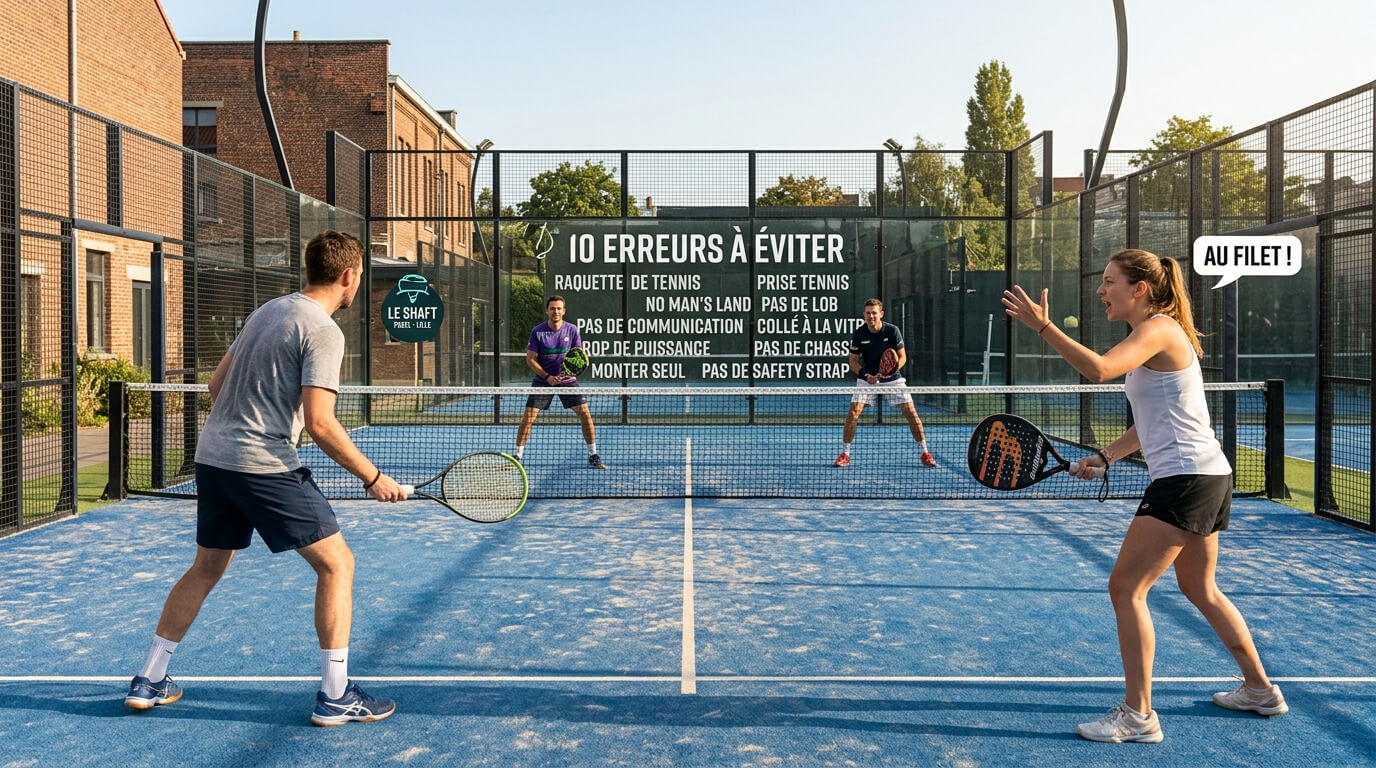
Padel is one of the easiest sports to pick up: in a single session you are already hitting balls and having fun. But that accessibility hides a trap: most beginners quickly build bad habits that cap their level for months. The good news: these mistakes are well known, and easy to correct when spotted early. Here are the 10 most common mistakes when starting padel, and how to avoid them from your very first games.
1. Staying glued to the back of the court
Mistake number one. Out of tennis reflex, the beginner stays in defence. But in padel, the net is the dominant position: that is where points are won. As soon as you get the chance, move up to the net with your partner.
2. Trying to smash every high ball
The smash is thrilling, but poorly controlled it comes back into the court and hands over an easy counter. Until your smash is reliable, prefer a controlled bandeja that keeps you at the net. Our essential padel shots break down this key stroke.
3. Ignoring the lob
Many beginners never lob. Yet it is padel's most profitable weapon: a good lob pushes your opponents back and hands you the net. Learn to lob high and deep from the start.
4. Hitting too hard
Power without positioning multiplies unforced errors. In padel, consistency beats power: put one more ball back and let your opponent make the mistake.
5. Misplaying the walls
Fleeing the ball coming off the glass, or hitting it too early: two beginner reflexes. Step back early, let the ball drop into your hitting zone, and play it calmly after the bounce.
6. Standing one in front of the other
A padel pair moves side by side, as if tied together by a rope. If one moves up and the other stays back, you leave a gaping hole in the middle. Move up and back together.
7. Not communicating
"Yours!", "I'm going!", "Leave it!": three phrases that prevent half of all errors. A pair that talks almost always beats a more talented but silent pair.
8. Neglecting the serve and return
The serve is played underarm, below the hip: aim for placement, not speed. On the return, a deep cross-court ball is enough to take back the initiative. No need to go for a winner right away.
9. Choosing the wrong racket
Many beginners buy a powerful pro racket, hard and demanding. When starting out, prefer a round, light and soft racket, far more forgiving. Our guide on how to choose a padel racket helps you get it right.
10. Always playing the same opponents (or too strong)
Improving requires balanced games. Matches that are too hard break confidence; matches that are too easy teach nothing. Look for opponents at your level, and vary your partners to discover new styles.
How to fix these mistakes quickly
- Target one mistake at a time: trying to fix everything at once does not work.
- Take a few lessons early: a coach spots in five minutes what you cannot see.
- Film your matches: your real positioning always surprises you.
- Play often: nothing replaces the volume of games against suitable opponents.
FAQ
What is the most common beginner mistake in padel?
Staying at the back of the court. Out of tennis reflex, players defend instead of moving up to the net, which is actually the winning position in padel.
Do I need lessons to start padel?
It is not mandatory, but a few lessons early on clearly speed up learning: the serve, wall play and the bandeja come much faster with a coach.
How long until I stop playing like a beginner?
With two or three sessions a week against suitable opponents, you erase the most visible mistakes within a few weeks. Consistency beats intensity.
Which racket should a beginner use?
A round, light racket (350-365 g) with a soft core. Forgiving and comfortable, it makes learning the basic shots easier.
Conclusion
Starting padel is mostly about avoiding bad reflexes: move up to the net, lob, play consistently, communicate and choose suitable gear. Fix one mistake at a time and play often: progress will come fast. To stack up matches against players at your level, download Padeligo and find partners in seconds.